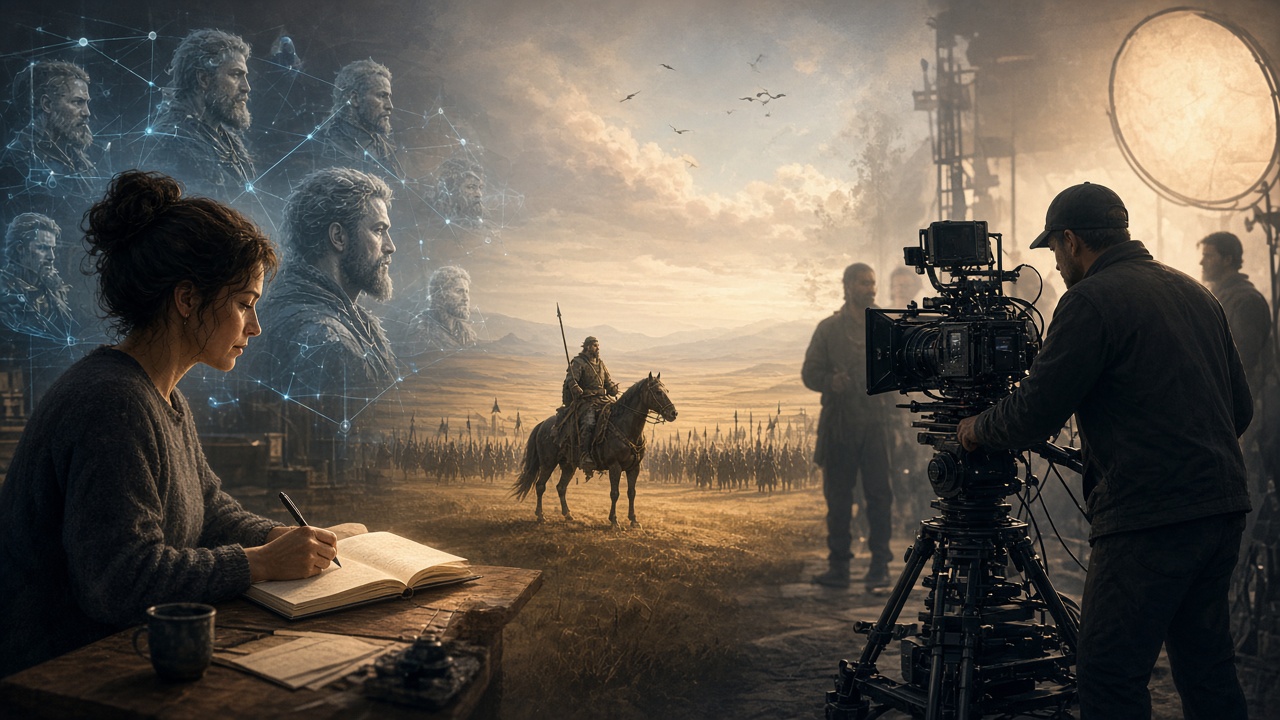
A new studio says it can bring science-fiction, fantasy and historical novels to the screen without the budgets that typically stall such projects at Hollywood studios, by building adaptations largely with AI. Authors First, founded by private equity veteran Robert Hamwee, launched this week promising authors more control over how their books reach film and television.
The company uses a combination of AI generators, including Seedance 2.5 and Nano Banana, along with other tools such as the visual effects platform Blender, according to Variety. The goal, the company says, is to adapt books as closely as possible to an author's original vision, without the budget constraints that can derail period pieces, effects-heavy fantasy or stories requiring extensive location shooting.
Authors First launched after raising more than $10 million in seed funding. Backers include Hamwee himself, the venture capital firm Brand Foundry, and investors including The Family Office of David Blitzer, Andy Mills, Mike Duggal and John Kline, Variety reported. Hamwee serves as chief executive, and his leadership team includes veterans of Hulu, Warner Bros. and Universal.
Hamwee framed the company's mission around creative control. "As a lifelong fan of historical fiction, science fiction, and fantasy epics, I've always believed the definitive version of any story is in the author's imagination," he said in a statement reported by Variety. He added that the studio was built to give authors full creative control and modern tools "so production budgets no longer dictate what's possible on screen."
First adaptation: a Genghis Khan epic
The studio's debut project is "Genghis: Birth of an Empire," an adaptation of British author Conn Iggulden's 2007 novel "Wolf of the Plains," about the early life of Genghis Khan. Variety reported that roughly 25 people worked on the story, camera angles and character dialogue, though the project was mostly generated by AI.
Iggulden said the adaptation would not have happened without AI. Previous offers to adapt the book had fallen through because of the budget a historical epic would require, he said.
Shooting on location across Mongolia would have taken significant capital and years of production, Iggulden said in a statement reported by Variety. He said the AI-made version lets readers experience the story as he originally envisioned it, without the compromises a traditional production would have required.
Part of a wider trend
Authors First is not the only company pursuing AI-driven book adaptations. Variety reported that Utopai Studios is adapting Mike Bender's children's book "The Most Serious Fart," as well as the Chinese literary classic "Journey to the West," using AI. Separately, the AI animation studio Intelligent Animation is adapting "The Dragon Prince's Bride" for the microseries platform aTwist, according to Variety.
For authors whose books have sat with studios for years without moving into production, the pitch from companies like Authors First is that AI tools remove budget constraints around location shoots, period costuming and visual effects rather than simply lowering them. Whether that proves true across a wider range of titles, beyond the Iggulden project, has yet to be tested.
Sources
Every quotation and figure in this article is checked against the source reporting linked above before publication. How we report