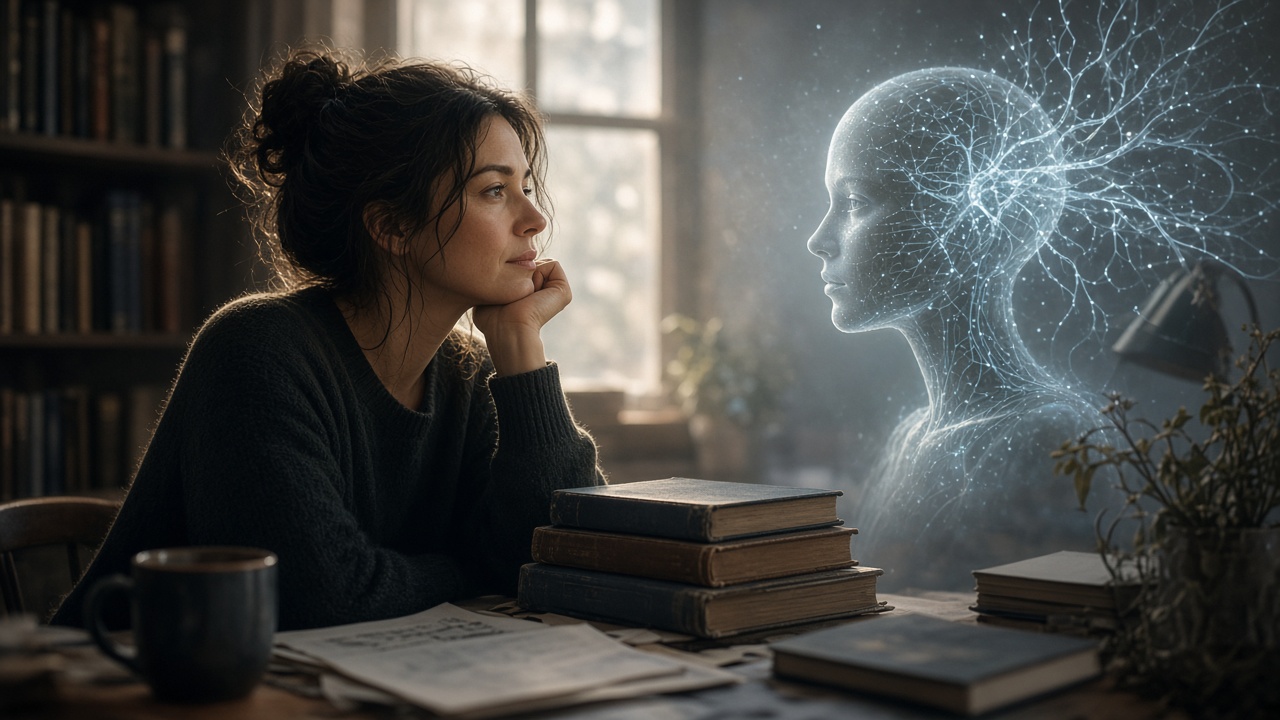
A novelist says the themes of her new book about artificial intelligence are playing out in real time, just as the book reaches shelves. Libbie Grant, author of The Ended World from Galiot Press, wrote in a Book Riot piece published Monday that she "never imagined" she'd see her novel's ideas echoed in current events so soon after finishing it.
The Ended World is a literary novel following two characters whose views on technology and spirituality are tested when an AI appears to have gained consciousness, according to Book Riot. Grant wrote that the novel asks what it means to be human at the start of the AI era.
Grant wrote that debates over AI consciousness are now playing out in major publications, and that tech companies are hiring psychologists, ethicists and philosophers to help guide decisions related to it. She did not name specific publications or companies.
What it means for the AI-fiction shelf
Grant's essay places her own book alongside three other novels she says explore humanity's relationship with thinking machines. For working novelists, the piece is a reminder that AI consciousness has become an active subject in literary fiction, not just a premise for genre or speculative work.
The first title Grant recommends is Culpability by Bruce Holsinger, which she describes as an Oprah's Book Club pick that appeared on multiple best-of-2025 lists. Grant called it a tense family drama built around the aftermath of an accident involving an AI-driven minivan, and described it as a portrait of a family trying to hold onto their humanity against what she called technological encroachment and overbearing capitalism.
The second is Speak by Louisa Hall, which Grant described as a narrative that moves across time and multiple characters, each connected to the creation of lifelike dolls given artificial intelligence.
The third is Klara and the Sun by Kazuo Ishiguro, about an AI-powered android waiting in a store to be chosen by a human owner. Grant called it a touching exploration of the need for love and belonging, and wrote that exploring those emotions through a non-human character makes the novel more affecting.
Grant did not specify which publications or companies she was referring to when describing current debate over AI consciousness, and Book Riot's piece does not name any. The claim comes from Grant's own essay rather than separate reporting.
For authors tracking how AI is showing up in literary fiction, Grant's list points to a small but recurring shelf: family drama, speculative narrative and character-driven android stories that use artificial intelligence to ask what separates human feeling from simulation. Her own novel, she wrote, tries to answer that question "at the beginning of the age of AI."
Sources
- Thought-Provoking Novels About AI — Book Riot,
Every quotation and figure in this article is checked against the source reporting linked above before publication. How we report